The first time most families think seriously about preserving memories is after something is already gone: a grandparent’s voice, the specific way a toddler mispronounced a word, the look of a birthday table they swore they’d remember. A family memory routine solves this by building small, consistent habits around capturing and organizing milestones before they fade. It doesn’t require a dedicated weekend or an expensive setup. It requires a repeatable system that fits into everyday life.
Here’s how to build one.
What a Family Memory Routine Actually Looks Like
A family memory routine is a set of recurring actions that ensure your milestones, big and small, are captured, stored, and organized in a form you can actually find and use later. It works in three layers: in-the-moment capture, monthly organization, and an annual archive and print pass.
The goal isn’t completeness. It’s consistency. A routine you maintain 80% of the time across years will produce a richer family record than a single ambitious project you abandon after a month. In most cases, the families with the best-preserved memories aren’t the ones who do the most at once; they’re the ones who’ve built the smallest sustainable habits and stuck to them.
The three-layer structure breaks down like this:
- Daily or in-the-moment: capture photos, voice notes, and written details as things happen
- Monthly: sort, label, and add context to what you’ve collected
- Annually: archive, back up, and create a tangible output such as a printed photo book
Building Your Capture Habit, One Layer at a Time
The Daily and In-the-Moment Pass
The most important part of the routine isn’t the most elaborate. It’s the habit of capturing things when they happen, rather than relying on memory to reconstruct them later.
Smartphone photography handles most of this automatically for visual moments. The gap, almost universally, is context. A photo of a child blowing out candles is easy. A note that says “he asked for a pirate ship cake for two years in a row and was furious both times when we made it correctly” is the kind of detail that makes a photo meaningful 20 years later.
A few habits that work well here:
- Use your phone’s voice memo app to record a 30-second note after a milestone moment, while the details are still vivid
- Keep a simple shared note in Google Keep or Apple Notes labeled “family moments” and drop in one or two lines when something worth remembering happens
- For bigger milestones, take a second photo that includes environmental context: the room, the setting, the other people nearby
One of our team members started doing a voice note at the end of each month’s first Sunday, just a 2-3 minute recap of what happened that month with the kids. It sounds minimal, but after 18 months, that audio record is something no photo album can replicate.
You don’t need to do all of these. Pick the one that causes the least friction and build from there.
The Monthly Sort and Context Pass
Once a month, ideally at a fixed time, you do a single pass through everything you’ve captured. This doesn’t need to take more than 20-30 minutes.
The tasks for this pass are straightforward: move photos from your camera roll into a labeled folder (year, then month), add names and dates to any unlabeled images, attach your voice notes or written context snippets to the relevant photos, and delete the obvious duplicates.
The labeling step is the one most families skip, and it’s the one that matters most for long-term memory keeping. A folder called “2024-06” is useful. A folder called “2024-06 – Maya’s kindergarten graduation and summer lake trip” is something you can actually navigate.
For families using Google Photos or Apple Photos, the organizational tools are already there. The habit is just deciding to use them.
The Annual Archive and Print
Once a year, typically at the end of December or early January, you do the full archive pass. This has two parts: a digital backup audit and a physical output.
For the digital backup, the American Red Cross recommends storing copies in at least two locations, including a cloud service such as Google Drive, Amazon Photos, Dropbox, or iCloud, and an external hard drive kept somewhere separate from your primary home. This is especially important because digital files aren’t permanent by default. Hard drives fail, cloud subscriptions lapse, and phone backups can go missing after an upgrade. You can read more about preserving your memories in detail on the Red Cross site.
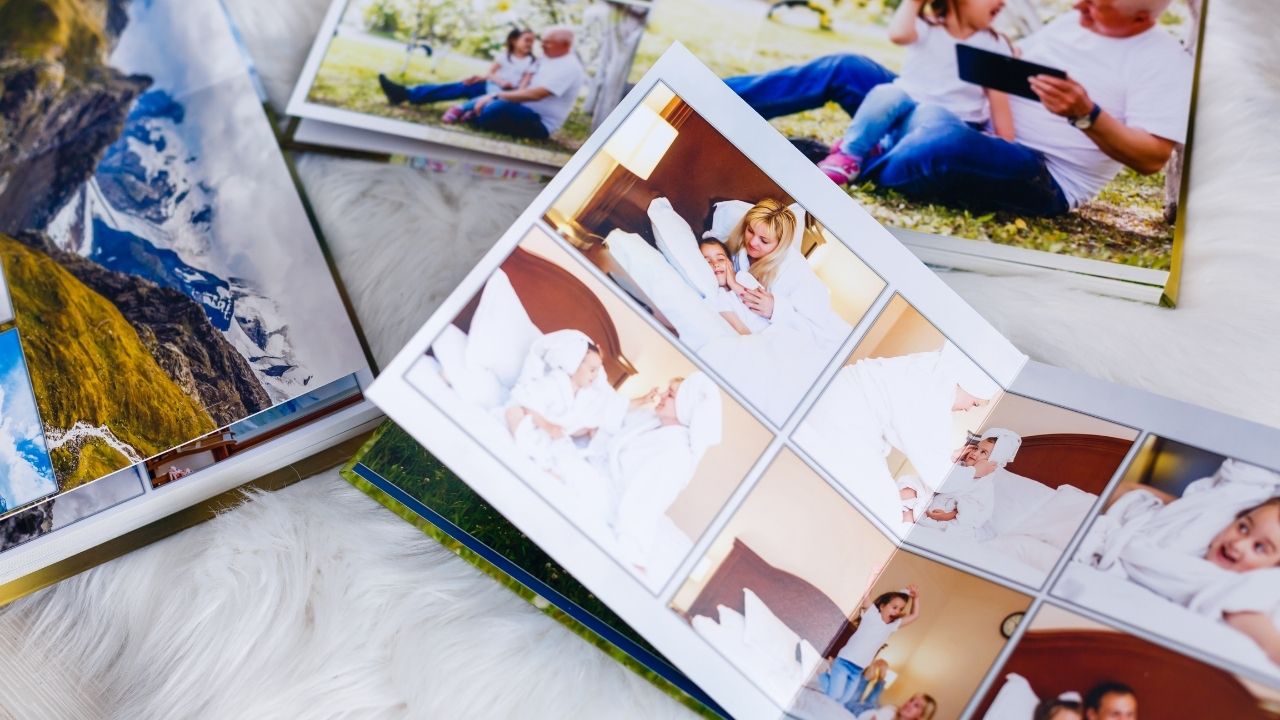
For the physical output, a printed photo book is one of the most reliable formats for long-term, accessible family record-keeping. Services like Mixbook let you build custom photo books from your existing photo library, with templates that handle most of the layout work. An annual family photo book, even a short one, creates a tangible record that doesn’t depend on a platform staying operational or a file format remaining readable.
Where to Keep Everything (and How to Make Sure It’s Findable)
Storage systems fail when they’re too complicated to maintain or too scattered to navigate. The most practical approach for most families is a three-part structure: a primary cloud library for photos and videos, a single notes document or journal for written context and stories, and a physical location for tangible keepsakes.
The cloud library handles the volume. Something like Google Photos or iCloud, with automatic backup turned on, ensures you’re not losing daily captures. The key habit here is adding your labeled folder structure on top of it during the monthly pass.
The notes document is underused by most families but genuinely valuable. A single document, updated monthly, that records the key stories, funny quotes, developmental notes, and context behind your photos takes maybe five minutes a month to maintain and becomes something irreplaceable over years.
The physical location, a dedicated box, drawer, or shelf, handles the things that don’t digitize well: birthday cards, report cards, small keepsakes, a child’s first drawing. Keeping all of it in one place, rather than scattered across multiple containers, means you can actually find it later.
The guiding principle for storage is to keep the number of locations minimal. Every additional location is a place where things get lost.

The Milestones Most Families Forget to Document
The major milestones, first days of school, graduations, holidays, tend to be well-photographed. The ones that slip through most often are the ones that feel ordinary at the time.
A few worth being intentional about:
Everyday routines with your kids. The school drop-off routine, the specific way bedtime worked, the inside jokes that developed around dinner. These feel permanent while they’re happening and then become nearly impossible to reconstruct once they’ve changed.
The ages just before and after a transition. Families often photograph the event itself, the new baby, the first day at a new school, the move to a new house, but not the period just before it ended. A few photos and notes from the week before a major change capture something irreplaceable.
Your own routines as a parent or partner. Most family memory keeping focuses on children, which makes sense. But the habits, schedules, and daily life of the adults in the family are also worth documenting. Future generations are often just as curious about those as about children’s milestones.
Unscripted moments at gatherings. The conversation that happened in the kitchen at Thanksgiving, not the posed table photo, is usually what people remember most. A quick video or voice note after a family gathering captures the texture of the event in a way that formal photos don’t.
Family recipes and the stories behind them. A recipe card becomes much richer when it includes who first made it, when it appeared in the family, and what was idiosyncratic about the way your version was prepared.
Where Family Memory Routines Tend to Fall Apart
A few patterns show up consistently in families who’ve tried to build this kind of system and struggled.
Starting too big. A routine that requires two hours a month to maintain will last three months. A routine that requires 20 minutes will last years. Scale to what you’ll actually sustain, not to what feels comprehensive in the planning stage.
Keeping photos in too many places. Phone camera roll, a second phone, a partner’s camera roll, a shared family album, iCloud, and a Google account is a recipe for losing things. Consolidating to one primary library is worth the one-time effort.
Skipping the context layer. Photos without names, dates, or stories lose most of their value within a generation. Adding a sentence of context to each photo or album, even just the date and who’s pictured, is the single highest-leverage habit in memory keeping.
Waiting to organize until you have time. The monthly pass exists specifically to prevent a backlog from building. A 20-minute session once a month is far easier than a 10-hour session once a year. Building a daily routine that includes even minimal organization habits goes a long way here; this guide to how to build a daily routine covers the habit-stacking principles that make these small passes easier to maintain.
Relying entirely on digital storage. Cloud platforms change, accounts lapse, and formats become unreadable. Physical outputs, including printed books, serve as a hedge against digital loss and as objects that can be shared without a device.
Turning the Routine Into Something That Outlasts You
The families with the richest memory archives aren’t usually the ones with the most sophisticated systems. They’re the ones who decided that preservation was worth a small, consistent investment of time, and who kept showing up to do the monthly pass even when it wasn’t convenient.
A few things that make the routine stick over the long term:
Keep the primary habit visible. A label on your calendar for the monthly sort, a designated shelf for physical keepsakes in a room you use every day, these make the routine part of your environment rather than something you have to remember separately.
Involve other family members where it’s natural. Kids can be part of choosing which photos go in the annual book. A partner can share the monthly sort. Grandparents can contribute voice notes or written stories about their own memories during the annual pass. The more distributed the practice, the less it depends on one person to sustain it.
Make the output something people actually use. An annual photo book that sits on the coffee table and gets looked through during family gatherings is a different object than one that sits in a box in the attic. The more accessible and tangible your outputs, the more the routine reinforces itself.
Consistent beats perfect. A complete record of the ordinary years is worth more than a detailed archive of one exceptional one.
Frequently Asked Questions
How do you preserve family memories long-term? The most reliable approach combines consistent digital capture with a structured organization habit, a cloud backup in at least one location, and a physical output such as a printed photo book each year. Adding written context to photos, including names, dates, and brief stories, significantly increases their long-term value.
What milestones should families make sure to document? Beyond the obvious events like birthdays and graduations, the most commonly missed milestones are everyday routines with young children, the period just before a major life transition, and unscripted moments at family gatherings. Recipes, written stories from older relatives, and the daily habits of adults in the family are also worth capturing.
How often should families back up their photos? Cloud backups should be automatic and continuous. A manual backup audit, checking that both cloud and physical backups are current and accessible, is worth doing once a year during the annual archive pass.
What’s the best way to organize family photos? A folder-based system organized by year and month, with descriptive labels added during a monthly sort pass, works well for most families. Adding names and context notes within the labels makes photos significantly easier to find and more meaningful later.
Do you need a lot of time to maintain a family memory routine? No. The core habit structure described here requires roughly 5-10 minutes of daily or in-the-moment capture, 20-30 minutes for the monthly sort, and a few hours once a year for the archive and print pass. Most families find the monthly pass is the one that needs to be explicitly scheduled; the rest integrates naturally once the habit is established.