Orthodontic treatment is usually framed as a way to straighten teeth. That’s true, of course, but it only tells part of the story. Teeth sit inside a much larger system: lips, tongue, jaw joints, facial muscles, and the habits you’ve built over years of speaking and smiling. When tooth position or bite changes, people often notice shifts in places they didn’t expect.
Sometimes the change is functional. A sound becomes easier to pronounce. Lip strain eases. A smile starts to look more relaxed. Other times it’s behavioural. You stop covering your mouth when you laugh. You hold your head differently in photos. You show more of your teeth without thinking about it.
That’s why orthodontics tends to have effects that reach well beyond appearance. It can influence how a face moves in everyday life.
Why Teeth Position Affects More Than Appearance
Teeth help guide airflow, tongue placement, and lip contact. That matters for speech, but also for how facial expressions are formed. A protrusive bite may make it harder to close the lips comfortably. Crowding can change where the tongue rests. A deep bite might contribute to a tighter, less open smile. Even subtle differences in alignment can affect the way someone uses the lower half of the face.
This doesn’t mean orthodontic treatment changes personality or turns someone into a different person. It’s usually more understated than that. What changes is ease. Movements that once felt managed or self-conscious begin to feel automatic.
A lot of people have adapted to their bite for so long that they don’t realise how much compensation is happening. They may press the lips together to hide upper teeth, shift the jaw slightly when speaking, or avoid wide smiles in photos because a certain angle feels unflattering. These aren’t dramatic problems, but they are common ones.
The Subtle Link Between Orthodontics and Speech
Speech is one of the first things people worry about when starting treatment, and for good reason. Braces, aligners, and bite changes can temporarily affect pronunciation. But the longer-term picture is more interesting.
How alignment influences certain sounds
Some sounds rely heavily on the relationship between teeth, tongue, and lips. Think of “s,” “f,” “v,” “th,” and “sh.” If there is a large gap, an open bite, significant crowding, or protrusion, articulation may become less precise. In many cases, people have learned workarounds, so the issue is subtle rather than obvious.
As teeth move into better positions, those sounds may become clearer or require less effort. That said, there is often a short adjustment period. The mouth has to relearn familiar patterns. Adults especially tend to notice this because speech habits are deeply ingrained.
Why the adjustment period matters
Treatment isn’t just mechanical; it’s neuromuscular. The brain has mapped out how your mouth produces sound, and orthodontics changes the landscape. That’s why some people lisp briefly with aligners or feel awkward forming words after a bite correction. Usually, the change settles as the tongue and lips adapt.
For anyone exploring options, it helps to understand that treatment planning is not only about straightening visible teeth. Bite function, airway considerations, and facial balance all play a role, which is why resources on modern orthodontic care solutions in London are useful for understanding how different approaches can affect everyday comfort as much as appearance.
Laughing Changes When You Stop Managing Your Smile
A natural laugh is hard to fake. It pulls on muscles around the mouth, cheeks, eyes, and jaw all at once. If someone feels self-conscious about crowding, spacing, protrusion, or asymmetry, they often interrupt that movement without realising it.
You can see it in familiar habits:
- covering the mouth with a hand
- smiling with lips closed in group photos
- tilting the head to one side
- laughing but quickly looking down
These gestures are so common that they often feel like personality traits. In reality, they can be protective habits.
From controlled smiles to spontaneous expressions
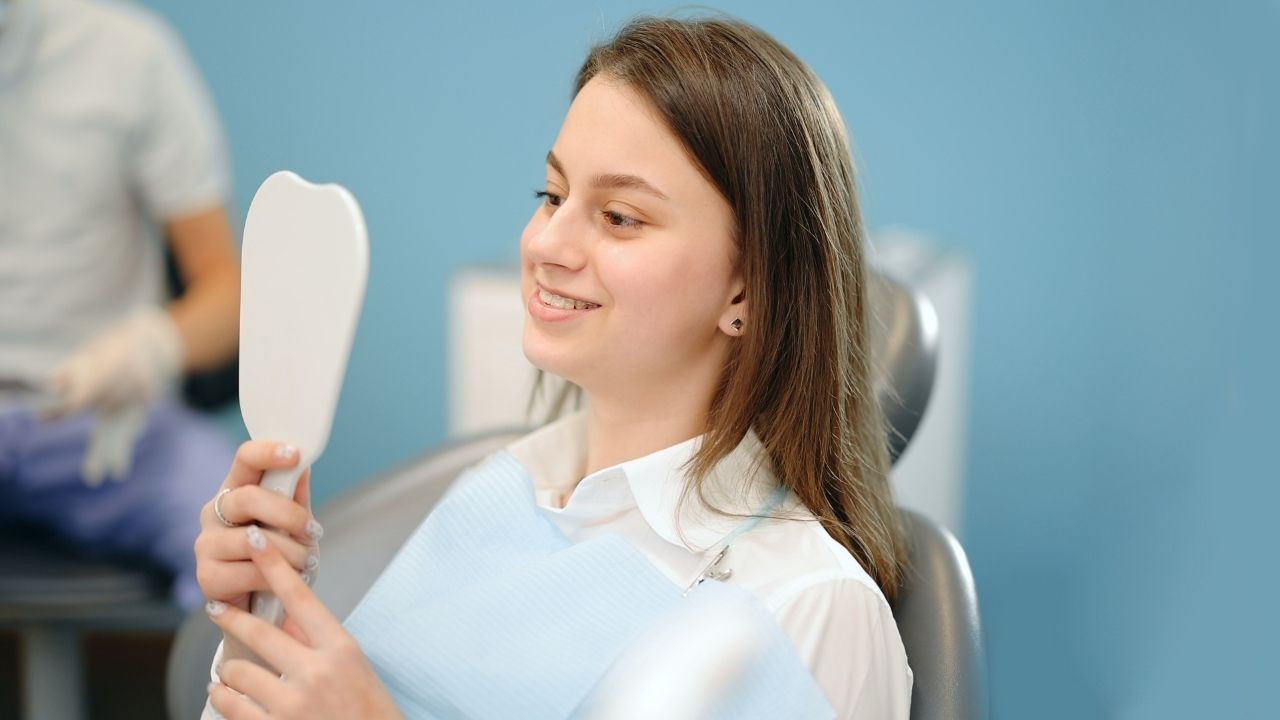
After orthodontic treatment, one of the most noticeable shifts is not necessarily a “better smile” in the cosmetic sense. It’s a more spontaneous one. People tend to smile wider, hold the expression longer, and stop editing themselves in social settings.
That matters more than many before-and-after photos capture. A broad, unguarded smile changes the whole face. The cheeks lift differently. The eyes engage more. The jaw looks less tense. Even if the technical dental changes are modest, the social effect can be significant.

The Way People Pose Often Tells the Real Story
Photos reveal habits we rarely notice in motion. If you’ve ever looked through old pictures and realised you always turned to the same side, kept your lips pressed together, or lowered your chin, there’s usually a reason. People tend to discover angles that minimise what they don’t like.
Orthodontic treatment can alter that pattern in a few ways.
Lip posture becomes more relaxed
When front teeth are very prominent or the bite prevents comfortable closure, the lips may strain at rest. Once alignment improves, the face can look calmer even when expressionless. That doesn’t just affect a smile; it changes the baseline posture of the mouth in candid images and conversation.
Jaw position can appear more balanced
Orthodontics won’t transform bone structure in the way surgery can, but correcting bite relationships can improve facial harmony. A less strained lower face, better incisor support, and improved symmetry often make people feel less dependent on a “good side.”
Confidence changes body language
This may be the biggest factor of all. When people feel less preoccupied with their teeth, they stop organising their posture around concealment. The shoulders loosen. The head lifts. They engage the camera instead of negotiating with it.
What People Should Expect Realistically
Orthodontics can influence speech, smiling, and facial posture, but it isn’t magic. Not every speech issue is caused by alignment. Not every posing habit disappears overnight. And not every smile concern is orthodontic in nature.
Still, for many patients, the most meaningful outcome is not that teeth are straighter. It’s that the face begins to function more naturally. Speech feels less effortful. Laughter looks less managed. Photos require less strategy.
That’s the quiet power of well-planned orthodontic treatment. It changes visible details, yes, but it also reshapes the small, repeated ways people present themselves to the world. And those daily moments, more than any clinical measurement, are often where the biggest difference is felt.
See more health and self-care posts like this:
What Your Lower Back Pain May Be Trying to Tell You (Build a Back Care Routine)