


A good outdoor kit isn’t just a pile of gear, it’s a system. Get it right before you leave, and everything from a two-hour trail run to a full-day hike feels easier, safer, and more enjoyable. Get it wrong, and you’ll be adjusting wet socks, rooting around a disorganized pack, or wishing you’d packed that extra layer before you even hit the trailhead.
This checklist is built to work as a repeatable pre-trip routine, something you run through every time you head out, not just the first time. We’ve broken it down category by category so nothing gets overlooked, whether you’re new to trail time or you’ve been doing this for years.
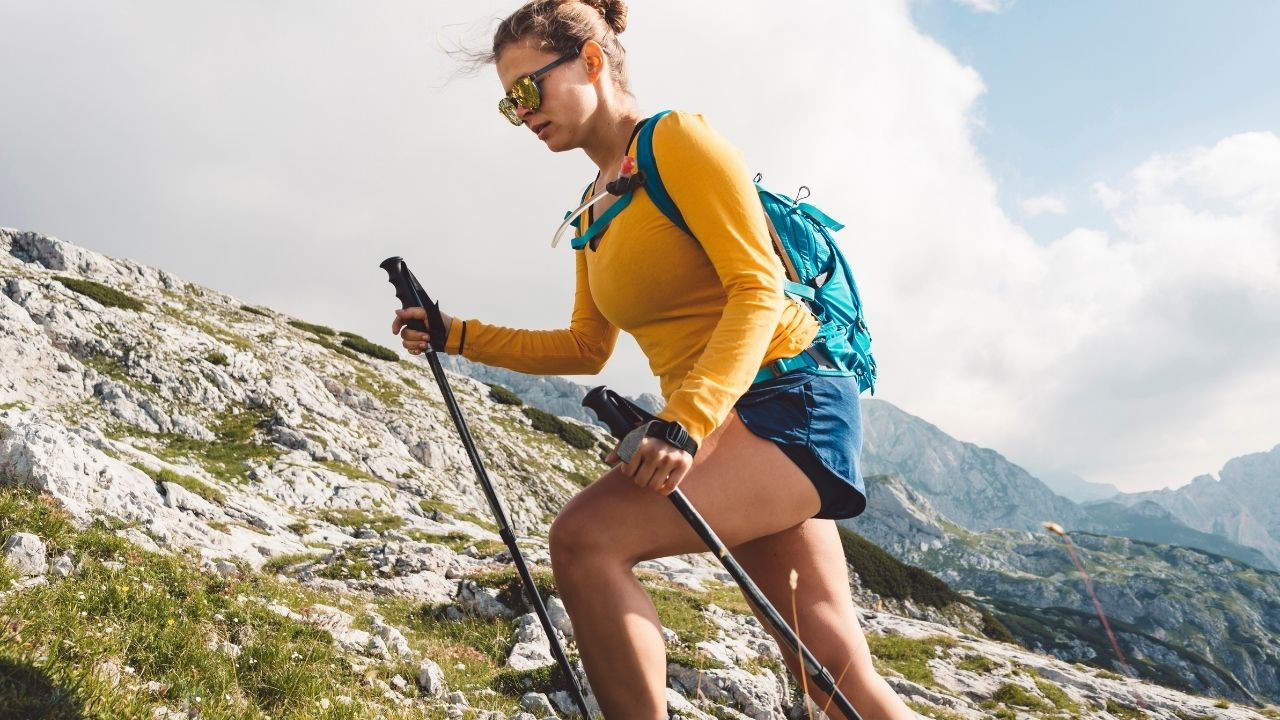
The Gear Every Active Woman Needs Before She Heads Out
Here’s the core of a solid women’s outdoor kit for day hikes, trail runs, and active outdoor days:
- Bottoms: Moisture-wicking, movement-friendly pants or leggings suited to terrain
- Base layer top: Synthetic or merino wool; never cotton
- Mid layer: Lightweight fleece or insulated jacket (even in summer)
- Outer layer: Packable waterproof shell
- Footwear: Trail shoes or hiking boots with grip, paired with wool or synthetic socks
- Daypack: 10-30L depending on trip length, with a hip belt for longer outings
- Water: Minimum 500ml per hour of activity; more in heat or at elevation
- Nutrition: Calorie-dense snacks; whole meals for hikes over 4 hours
- Navigation: Offline maps or downloaded GPS route; paper map as backup
- First aid kit: Including blister care, antiseptic, and any personal medications
- Sun protection: SPF 30+ sunscreen, UV-rated sunglasses, sun hat or cap
- Headlamp: With fresh or spare batteries
- Emergency basics: Whistle, emergency blanket, small multi-tool
This list applies to most day outings. For multi-day trips, backcountry routes, or technical terrain, you’ll need to expand on several categories, particularly navigation, shelter, and nutrition.
Category by Category: What Goes in Your Kit
Bottoms That Work Harder Than Leggings
What you wear on your lower half sets the tone for the whole day. For light trails and lower-mileage active days, moisture-wicking leggings with secure pockets do the job well. For anything more demanding, such as brushy terrain, full-day hikes, or variable weather, a purpose-built trouser offers better protection and durability.
The best women’s outdoor pants combine stretch fabric with a fitted cut, cargo-style pockets positioned for real use, and materials that resist snags, moisture, and abrasion. Tactical pants for women are worth considering here: they’re engineered for durability and mobility, with reinforced stitching and pocket layouts designed around actual utility rather than aesthetics. They’re increasingly popular with hikers and trail runners who want pants that handle demanding terrain without sacrificing comfort.
Whatever you choose, avoid jeans and standard cotton trousers. Cotton holds moisture, restricts movement, and causes chafing on longer outings.
Layering From Base to Shell
Layering is one of the most important skills in any active woman’s outdoor routine. The general principle is three layers: base, mid, and outer.
Base layer is the one against your skin. It should be moisture-wicking, quick-drying, and ideally made from merino wool or a synthetic blend. Merino is worth the investment if you’re doing multi-day trips since it resists odor better over time. For day hikes, a good synthetic base layer is typically enough.
Mid layer provides insulation. A lightweight fleece or a packable down or synthetic insulated jacket fills this role. Even on warm days, temperatures at elevation or after sunset can drop faster than expected. We’ve been caught more than once packing for the forecast and wishing we’d added that extra layer. One of our team makes it a rule to always throw a mid layer in the pack, regardless of the weather app.
Outer layer is your protection against wind and rain. A packable waterproof shell that weighs under a pound is ideal. Look for taped seams and a hood that fits over a helmet or buff if you need it. Breathability matters on active days where you’re generating heat.
Footwear and Socks
Footwear is arguably the most important gear decision for active outdoor days. The wrong choice causes blisters, reduces traction, and increases injury risk, particularly on uneven or wet terrain.
For light trails and maintained paths, trail running shoes with decent grip are often enough and add less weight than boots. For longer hikes, wet or technical terrain, or routes with significant elevation gain, a pair of well-fitted hiking boots with ankle support and a waterproof membrane is the stronger call.
Socks deserve as much attention as shoes. Wool or synthetic hiking socks prevent the friction that causes blisters. Cotton socks are a trail mistake most women only make once. If you’re blister-prone, a thin liner sock under your hiking sock adds an extra layer of protection.
Break in new footwear on shorter outings before committing them to a full day on the trail.
What Goes in the Pack
Pack size depends on trip length. A 10-20L daypack covers most half-day and full-day hikes. Look for a ventilated back panel, a hip belt (essential for anything over 5 miles), and a dedicated hydration sleeve if you prefer a reservoir over bottles.
Inside the pack, organization matters. Most active women find it useful to keep emergency items, first aid, and navigation tools in the same accessible outer pocket every time. Snacks and a mid layer go at the top of the main compartment for quick access. Heavier items, like a water reservoir, belong close to your back.
On hydration: a commonly cited benchmark is around 500ml of water per hour of moderate activity, with more needed in heat or at altitude. For a standard 3-4 hour day hike, plan to carry at least 1.5-2 liters. A water filter or purification tablets are worth carrying on remote routes where you can access natural water sources.
For food, prioritize calorie-dense, low-bulk options. Nuts, dried fruit, protein bars, and whole-grain crackers hold up well without refrigeration and deliver sustained energy on longer outings.
Safety and Navigation Essentials
Navigation tools are non-negotiable once you’re off well-marked, easily-navigable trails. At a minimum, have an offline map downloaded to your phone via an app like AllTrails or Gaia GPS before you leave. Cell service in remote areas is unreliable, and you don’t want to discover that mid-route. A paper topo map and compass as backup is worth adding for any backcountry route.
REI’s hiking essentials framework, which draws on the outdoor industry’s widely used Ten Essentials system, is a reliable reference point for safety gear. Beyond navigation, this includes illumination (headlamp with fresh batteries), sun protection, first aid, fire-starting kit, and an emergency shelter such as a lightweight bivvy or foil blanket.
A whistle belongs on your pack strap or accessible in a hip belt pocket. It carries further than your voice and costs almost nothing.
Building This Into a Pre-Trip Routine
The gear list only works if you actually check it before every outing. That’s where routine comes in.
We recommend a consistent pre-trip run-through, ideally the evening before, so you’re not making gear decisions at 6am in the dark. Here’s a sequence that works well:
- Check the forecast and adjust your layers accordingly. Rain coming? Waterproof shell goes in. Hot day? Swap the heavier mid layer for a packable option.
- Fill your water supply the night before. Hydration bladders and bottles take time; doing it in the morning rush often means heading out under-supplied.
- Pack your safety pouch first. First aid kit, headlamp, whistle, emergency blanket. These go in before anything else, so you know they’re there.
- Set out your clothing and check your footwear. Are your boots dry from the last outing? Laces intact? Footwear checks take 30 seconds and prevent a lot of frustration.
- Charge your devices. Phone, GPS unit, satellite communicator if you carry one.
- Leave a trip plan with someone. Route, start time, expected return, and emergency contacts. It takes two minutes and it matters more than most gear items if something goes wrong.
This kind of structured prep is what separates the experienced outdoorswomen from those who regularly find themselves improvising on the trail. If you’re working on building reliable routines across other areas of your life too, this guide to daily routine building applies the same principles to everyday habits.

Where Active Women’s Kits Tend to Come Up Short
Even well-prepared hikers and trail runners have consistent blind spots. These are the gaps we see most often.
Skipping the mid layer on warm weather outings. Temperature drops fast at elevation and in shaded terrain. A 70-degree day at the trailhead can feel 20 degrees colder at the summit. Pack the layer even when you don’t think you’ll need it.
Underestimating sock quality. It’s tempting to cut weight or cost here, but poorly fitted socks cause more outdoor trip interruptions than almost any other gear item. A quality pair of wool hiking socks is one of the best investments in the whole kit.
Phone-only navigation. Screen visibility drops in bright sunlight, batteries drain faster in cold temperatures, and cell service disappears in remote terrain. An offline-capable navigation app with maps downloaded in advance is the minimum. A paper backup is better.
No blister kit. A few moleskin squares and blister patches add almost no weight but can rescue an outing that would otherwise end early. They’re particularly important when breaking in new footwear.
Under-packing food. Active outdoor days burn significantly more calories than most people expect, particularly at elevation. Feeling low on energy on the descent is uncomfortable; feeling low on energy in technical terrain can be dangerous. Pack more than you think you need.
Worn-out waterproofing. If your outer layer has been through a few seasons and you haven’t re-proofed it, it may no longer be doing its job. A DWR re-treatment spray costs a few dollars and restores performance.
The Kit That Goes Out Every Time
The best outdoor kit is a consistent one. Not the most expensive, not the most technical, but the one you’ve organized well, know inside out, and check the same way before every outing.
Once you’ve built your core kit, the routine becomes faster. The night-before pack check drops to under ten minutes. You stop forgetting things and start enjoying the actual experience more.
Focus on getting the non-negotiables right first: bottoms you can move in, a functional layering system, footwear that’s properly broken in, and a pack with water, food, and a basic safety setup. The rest can be refined over time as you learn what your outdoor outings actually demand.

