I went into this skeptical. Propel is owned by PepsiCo, sold next to Doritos at gas stations, and marketed with the kind of breathless fitness language that usually means nothing. “Electrolyte hydration.” “Next-level performance.” Right. So when my co-editor challenged me to actually swap out plain water for Propel for a full 30 days and track what changed, I figured the worst outcome was I’d have a lot of mildly flavored water and nothing interesting to report.
What actually happened was more nuanced than I expected. Some things improved. Some things were a complete non-event. And one thing about the ingredient list took me by surprise in a way I hadn’t anticipated.
Here’s what 30 days of daily Propel water really looks like.
Why We Picked This Drink to Test
Propel lands in a strange middle zone of the sports drink world. It’s not water. It’s not Gatorade. It’s not a serious electrolyte supplement like LMNT. It’s been around since 2002 and the formula has barely changed. And yet it’s one of the most commonly grabbed drinks at gyms, running tracks, and fitness studios across the US.
Dozens of articles will tell you whether Propel is “good for you” in a general sense. They’ll recite the nutrition label. They’ll compare it to Gatorade. They’ll mention sucralose. Almost none of them tell you what it’s actually like to make it your go-to hydration drink for a month while tracking sleep, energy, and workout performance.
That’s the gap this piece fills.
It also fits into a broader conversation we’ve been having at RoutineBase about electrolytes and hydration routines. If you’ve read through Andrew Huberman’s daily routine, you’ll know he’s meticulous about electrolytes before and after workouts, using a specific sodium-potassium-magnesium protocol. Propel sits at a very different point on that spectrum, and we wanted to understand where exactly.
The Setup: One Month, One Drink, Tracked Numbers
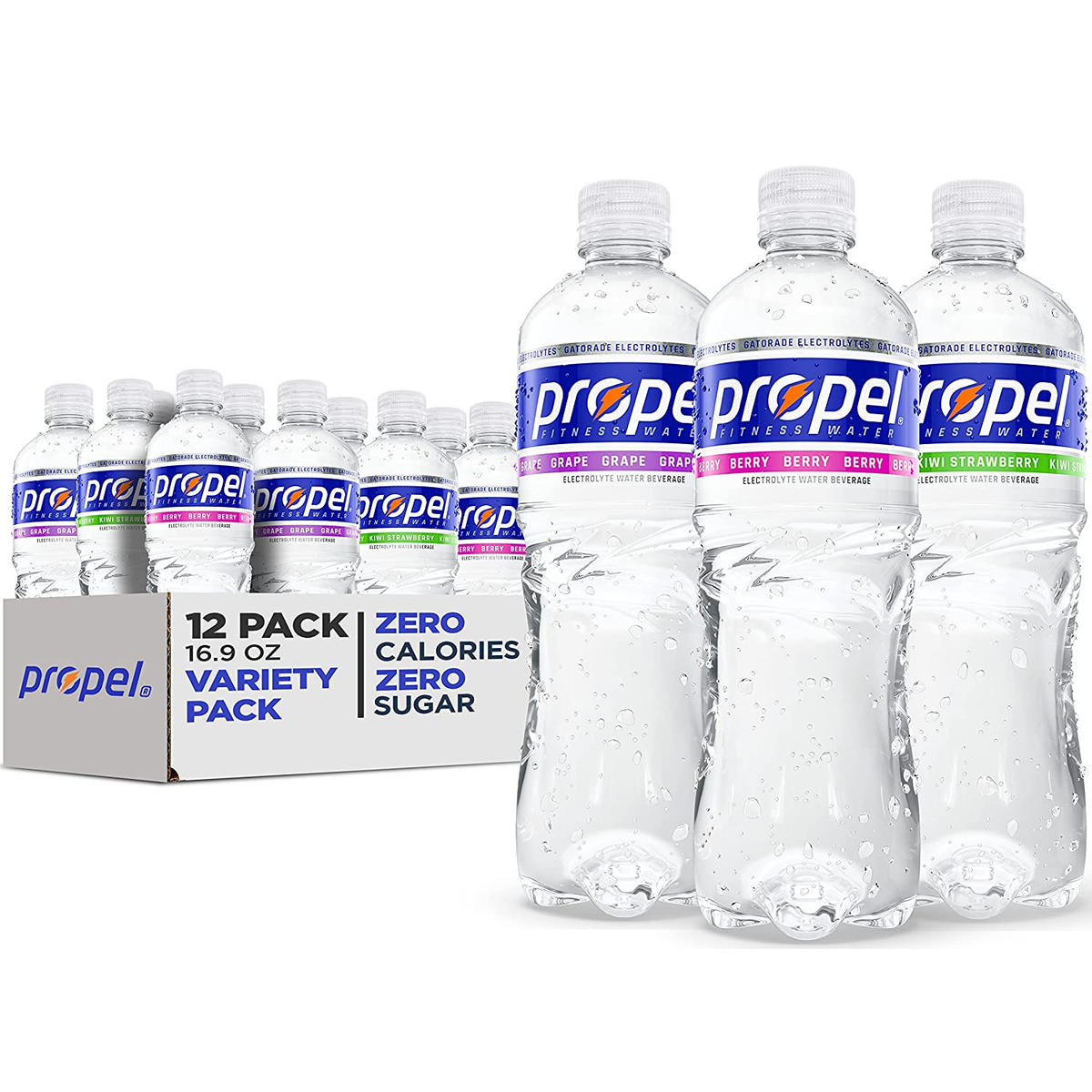
The format was straightforward. Starting March 1, I replaced my usual combination of plain water, occasional sparkling water, and one-a-week electrolyte powder sachet with Propel Electrolyte Water exclusively. I drank between 2 and 3 bottles per day (20 oz each), which is how I typically hit my hydration targets.
My baseline before the experiment:
- Average sleep score (Oura Ring): 74
- Average resting heart rate: 58 bpm
- Daily readiness score: 68
- Training schedule: 4 sessions per week (2 strength, 1 long run, 1 yoga)
- Caffeine: 2 cups of coffee before noon, nothing after
- Diet: mostly whole foods, moderate sodium from cooking
I chose the Kiwi Strawberry and Lemon flavors, rotating between them. I kept a daily notes doc with subjective observations on energy, focus, and how workouts felt.
What I didn’t change: sleep schedule, training volume, meals, or caffeine intake. The only variable was my hydration source.
Confounders I couldn’t fully control: March had two travel days (different time zones, disrupted sleep), and I had one 4-day period of higher training volume during a trail running week.
Week 1: This Is Fine (But Different)
The immediate shift I noticed had nothing to do with electrolytes. It was the flavor.
Drinking 40-60 oz of lightly flavored water every day is genuinely easier than drinking the same amount of plain water. I hit my hydration targets more consistently in week 1 than I typically do. That’s not a performance metric, but it’s real. If you’re someone who “forgets” to drink water, Propel solves that problem through taste alone.
By Day 4, I started noticing something I hadn’t expected: I was less likely to reach for an afternoon sparkling water or a second coffee around 2pm. My hunch was that better baseline hydration was covering the energy dip I sometimes attribute to caffeine need. It could have been placebo. I logged it either way.
Sleep score in week 1: averaged 76 (up from baseline of 74, within noise).
Workout feel: no notable difference in strength sessions. The long run on Day 6 felt fine. I didn’t cramp, I didn’t bonk, nothing special.
One thing I did clock early: the sweetness of Propel is real. It’s not intense, but it’s there. Both sucralose and acesulfame potassium are in the bottle, and if you’re used to plain water, the first few days feel slightly odd. By Day 5 I’d stopped noticing it.
Week 2: The Sodium Question
By week 2 I was curious about the sodium math. Each 20 oz bottle of Propel contains 270 mg of sodium. Two bottles a day means 540 mg from Propel alone, before I account for cooking salt or anything in food.
The daily upper limit the CDRR recommends for chronic disease risk reduction is 2,300 mg of sodium. With Propel as my main hydration source, I was adding a meaningful chunk to my total. For an office-only week with low sweat output, that addition didn’t feel necessary. For a high-training-volume week, it tracked better.
This is the thing the “is Propel good for you” articles tend to gloss over: context matters enormously. The same bottle of Propel that makes sense after a 90-minute run in July makes less sense on a January rest day at your desk.
Day 10 note: “Energy feels stable. No afternoon crash. Hard to tell if it’s Propel or just good sleep this week.”
Day 12 note: “Workout felt solid. PR’d my squat accessory set. Probably unrelated.”
Sleep score week 2 average: 77. Resting HR: 57. Marginal, nothing dramatic.
Week 3: The Part Where I Got Suspicious of Myself
Week 3 was travel week. Two flights, a different time zone for three days, hotel food, disrupted schedule. I kept drinking Propel because it’s sold basically everywhere and it was easy to grab. That consistency was actually one of the practical upsides I hadn’t fully considered before starting: Propel is available at airports, convenience stores, hotel gyms, and gas stations across the US in a way that LMNT packets or other premium electrolyte products simply aren’t.
But travel wrecked my sleep data anyway (average dropped back to 72), so I can’t attribute anything meaningful to the drink from this week.
What I did notice on travel week: I was less dehydrated landing off the plane than I typically am. I drink more deliberately when I’m holding something flavorful. That’s a small but genuine practical win.
Day 18: “Starting to wonder how much of this is the drink and how much is just the act of tracking.”
Day 20: “Drank three bottles today during trail run. Legs felt fine after. Calves didn’t cramp (they sometimes do on long efforts).”
The calf cramp thing is anecdotal and worth flagging as such. I can’t isolate whether the additional sodium and potassium from Propel made a difference on that run, or whether pacing did. The Center for Science in the Public Interest notes that for most people, there’s no need for extra electrolytes until you’ve been doing intense exercise for more than an hour. My run was 2.5 hours. That’s the zone where electrolyte drinks start actually making sense on the science.
Week 4: Getting Honest About the Sweetener Question
By the final week I’d done enough reading to land on the part of Propel that gives me the most pause: the artificial sweeteners.
Propel uses both sucralose (Splenda) and acesulfame potassium (Ace-K). The FDA considers both safe. But I was now drinking 40-60 oz of both per day for four weeks, and some research on habitual artificial sweetener consumption gives me more pause than the blanket “FDA-approved” label suggests.
I don’t have IBS. I didn’t experience any noticeable digestive issues during the month. But I do think if you have a sensitive gut, or if you’re specifically trying to reduce your intake of ultra-processed ingredients, the sweetener situation in Propel is worth thinking about rather than just accepting.
Day 25 note: “I genuinely enjoy drinking this more than plain water. That’s either great (better hydration) or a mild dependency on sweet flavor. Probably somewhere in between.”
Day 28 note: “Tried a glass of plain water. Tasted like nothing. Slightly concerned this is how soda people feel about soda.”
Day 30: “Done. Sleep score this week: 78. Resting HR: 57. Feeling normal.”
What Actually Changed After 30 Days
Here’s what the data showed, with full acknowledgment that n=1 is not a clinical trial:
Sleep score: Moved from a baseline average of 74 to an end-of-experiment average of 77. Meaningful? Possibly. Propel-caused? Unclear. The more credible explanation is that slightly better daily hydration improved baseline recovery.
Resting heart rate: Went from 58 to 57 bpm. Within rounding error.
Workout performance: No dramatic change. One subjective improvement in endurance runs (less post-run fatigue, possibly hydration-related). Strength numbers unchanged.
Hydration consistency: Measurably better. I hit my fluid targets 26 out of 30 days. In a typical month I’d estimate 18-20 days. This is the clearest outcome from the experiment, and it’s about the flavor, not the electrolytes.
Afternoon energy dip: Reduced or absent most days. Again, I suspect this is hydration, not anything proprietary to Propel.
What didn’t change: Weight, body composition, mood scores, focus.
What surprised me: How much the flavor factor drives compliance. Every serious health content site will tell you to “drink more water.” Propel gets you to actually do it, which is worth something.
Who This Is For and Who Should Skip It
This is genuinely useful for people who:
- Train at moderate-to-high intensity for 60-plus minutes and sweat meaningfully
- Struggle to hit daily hydration targets with plain water
- Are trying to replace sugary sports drinks or soda and need flavored variety
- Run, cycle, or do cardio in warm weather or humid environments
- Are fasting (no calories, no blood sugar impact)
Skip it or limit it if you:
- Sit at a desk most of the day and get enough sodium from food (the added electrolytes are a non-event and the sweeteners become unnecessary exposure)
- Have IBS or a sensitive gut (artificial sweeteners can cause bloating in some people)
- Are pregnant or breastfeeding (research on Ace-K in particular is limited in those populations)
- Are trying to reduce your overall intake of ultra-processed ingredients
- Already drink one-to-two liters of plain water comfortably every day
Propel is a useful tool, not a health drink. It’s best understood as a zero-sugar, zero-calorie bridge for people who need flavored liquid to hit hydration targets or who are exercising long enough that electrolyte replacement matters.
The Honest Verdict After 30 Days
Worth it? Conditionally yes. With caveats.
If you’re active, training multiple times a week, and you’re someone who finds plain water boring or hard to drink in volume, Propel is a reasonable everyday hydration tool. It’s genuinely better than most flavored alternatives (no sugar, no calories, actual electrolytes), and the electrolyte load is appropriate if you’re sweating.
If you’re sedentary or lightly active and already hydrate well, there’s no particular reason to drink it over water. The electrolytes won’t hurt you, but they won’t do much either. And you’d be taking in artificial sweeteners with no real upside.
What I kept after the experiment ended: I still use Propel on training days, particularly long runs and hot-weather workouts. I switched back to plain water on rest days and desk days. That split feels right for how my life actually works.
What I’d change if I ran it again: I’d track sweat rate more formally (there are now some wearable patches that measure electrolyte loss directly), and I’d include a true control month for better comparison. A single person, one month, no control group is the limit of what this experiment can claim.
One more thing: I expected to miss plain water more than I did. I didn’t. That might say something useful about Propel’s formula, or it might say something about taste adaptation. Either way, it’s worth knowing before you commit to a month of it.