Health Archives - RoutineBase

How to Build a Grounded Routine in Early Recovery

Early recovery can make everyday life feel unfamiliar. Old patterns may be changing while new ones are still taking hold, and trying to create the perfect schedule can add pressure when you really need steadiness.

A grounded routine doesn’t have to be elaborate. A few dependable habits can add structure while leaving room for rest, shifting energy, appointments, and everyday responsibilities.

The goal is a rhythm you can come back to, even when the day doesn’t go according to plan.

Routine in Early Recovery

Start With a Routine You Can Actually Keep

It can be tempting to change everything at once. A packed schedule may feel motivating at first, but it often becomes harder to maintain once real life gets involved.

No single routine works for everyone because recovery can follow many different paths. What feels manageable will depend on your circumstances, responsibilities, energy, and the support already in place.

Start with a few commitments you can realistically repeat. You might choose a regular wake-up time, eat meals at roughly familiar times, take a short walk, or leave a quiet part of the evening open for rest. You don’t need to fill every empty hour.

A useful routine has some give. Missing one part of the day or changing plans doesn’t mean you have to start over.

Create a Few Predictable Anchors in Your Day

You don’t need to plan every hour to create structure. A handful of familiar moments can give the day rhythm without making it feel overly controlled.

These anchors can be ordinary things. Breakfast before work, an afternoon walk, tea after dinner, or a quieter half hour before bed can become familiar points in the day.

Yoga or mindful breathing can also be part of the routine. A brief morning stretch, several restorative poses after work, or a few minutes spent focusing on the breath may feel more approachable than committing to a long practice every day.

Choose habits that can survive an imperfect day. The easier they are to return to, the less pressure there is to perform the routine perfectly.

Make Gentle Movement Part of the Routine

Movement doesn’t need to become another task. A walk, gentle stretching, or a short yoga session can give you time to move without turning the practice into a test of effort or endurance.

At home, keeping yoga realistic and sustainable often begins with choosing a manageable amount of time and adapting the practice to the life you actually have.

Some days may allow for a longer session. On others, slower movement, restorative poses, or a few quiet minutes with the breath may feel more appropriate.

Don’t judge a practice by how intense or long it was. Giving yourself room to adjust can make movement easier to return to as your schedule and energy change.

Protect the Basics: Sleep, Meals, and Rest

When a lot is changing, ordinary needs can slip into the background. Keeping some regularity around sleep, meals, hydration, and rest can give the day a more familiar rhythm.

Try to keep those habits simple. Eating at reasonably consistent times, keeping water nearby, and winding down before bed are small things that don’t require an elaborate plan.

Rest deserves space as well. If your energy is low, a shorter yoga session or a quiet evening may make more sense than pushing through a plan simply because it is written down.

No version of these habits is perfect. They are simply part of creating a day that feels manageable and leaves enough room for what you need.

Routine in Early Recovery

Make Professional Support Part of the Routine

Professional support may become one of the more dependable parts of the week. Treatment appointments, responsibilities, rest, and personal wellness practices may all need room without crowding one another out. Location can add another consideration, since the way someone organizes treatment and daily responsibilities may look different from one part of the country to another.

In Washington, for example, someone balancing treatment with a busy workweek may keep personal routines shorter on appointment days and leave more room for them on other days.

In Alaska, for example, personal responsibilities and the rhythm of the week can affect how someone organizes ongoing support. Someone considering outpatient alcohol rehab in Wasilla, AK may be looking for structured treatment that can be incorporated into everyday life while they continue living at home and managing regular responsibilities.

In Florida, someone with family commitments may keep yoga, movement, or quiet time flexible around treatment and busier parts of the week.

Details will differ from person to person. Personal wellness practices can remain adaptable while professional care keeps its proper place in the broader routine.

Stay Connected to Supportive People

A week can feel less isolating when it includes regular contact with people you trust. That might mean having dinner with family, checking in with a close friend, attending a peer-support meeting, or making simple plans with someone you feel comfortable around.

Connection doesn’t need to look the same every day. Sometimes you may want a long conversation. At other times, a brief check-in or quiet company may be enough.

It can also be helpful to spend time together in ways that don’t revolve around alcohol. A walk, yoga class, shared meal, movie night, or relaxed afternoon can create space for connection without making the occasion feel formal.

A balanced week can include both time alone and time with others. Having people you feel comfortable reaching out to can offer another familiar point of connection while other parts of life are changing.

Leave Room for Difficult Days

Even a thoughtful routine will get interrupted. Appointments run late, plans change, energy drops, and some days are simply harder than others.

On those days, scaling things back may be more realistic than abandoning the routine altogether. If a full yoga session feels like too much, a few minutes of stretching or quiet breathing may be enough. If the schedule falls apart, returning to one familiar habit can give you an easy place to restart.

One difficult day doesn’t erase the habits you have been building. Consistency can include pauses, changes, and fresh starts.

The routines that last tend to leave room for real life. Having a few familiar habits to return to can be more useful than expecting every day to follow the same plan.

Let Stability Build Gradually

A grounded routine develops over time. Small choices become familiar through repetition, and the habits that work well for your life often become easier to return to.

Early recovery can bring a lot of change, so don’t expect every part of daily life to feel settled immediately. Yoga, rest, connection, everyday responsibilities, and professional care can each find their place gradually.

Some days will leave more room for movement or quiet reflection than others. That variation is part of having a routine that responds to real life.

What matters is creating a rhythm that supports the life you are building now. Over time, those familiar points in the day can begin to feel less like items on a list and more like ordinary parts of daily life.

Preparing Your Skin for a Removal Appointment

Walking into a tattoo removal session with skin that’s sunburned, dehydrated, or freshly shaved can turn a routine appointment into an uncomfortable one — or worse, push your practitioner to reschedule you entirely. The laser needs healthy, calm skin to work on, and the weeks leading up to your session matter almost as much as the aftercare that follows. Here’s what to do before you sit down in the chair.

Clean and Protect the Area Beforehand

Wash the tattooed area with a gentle, fragrance-free soap the morning of your appointment. Avoid scented lotions, deodorants, or makeup over the site, since residue can interfere with how the laser reads the skin. If the tattoo is on a part of the body that gets rubbed by clothing or jewelry, keep it uncovered or loosely covered on the way in.

Skip any new skincare products in the days before your session, especially retinoids, exfoliating acids, or anything marketed as a brightening treatment. These can thin the skin or make it more reactive to heat, which increases the chance of blistering or prolonged redness afterward.

Skip the Sun for Two Weeks

Sun exposure is one of the biggest reasons removal appointments get postponed. Tanned or sunburned skin absorbs laser energy differently than untouched skin, which raises the risk of pigment changes, blistering, or uneven results. Practitioners generally ask clients to stay out of direct sun, and off tanning beds, for at least two weeks before treatment.

If you can’t avoid being outside, cover the tattooed area with clothing rather than sunscreen alone, since some sunscreen ingredients can also irritate the skin before a session. A tan line right over the tattoo is a common reason clinics will ask you to come back another day.

Avoid Blood Thinners and Alcohol

Anything that thins the blood makes bruising more likely and can affect how your skin responds during treatment. Aspirin, ibuprofen, fish oil supplements, and excessive alcohol all fall into this category. Where medically possible, avoid these for 48 hours before your appointment, though you should never stop a prescribed medication without talking to your doctor first.

Alcohol also dehydrates the skin, which isn’t ideal going into a session that already stresses the tissue. A dehydrated night before, paired with a laser treatment the next morning, often means a longer, itchier recovery.

Keep the Skin Hydrated, Not Irritated

Well-hydrated skin tends to handle laser treatment better and heals faster afterward. Drink water consistently in the days leading up to your appointment rather than trying to hydrate all at once the morning of. A plain, unscented moisturizer applied to the area the night before can also help, as long as it’s washed off before treatment.

That said, avoid anything that irritates the skin barrier, like harsh scrubs, waxing, or chemical peels near the tattoo site. Give the skin at least two weeks of rest from any of these before your session.

Shave the Area If Needed

If the tattooed area has noticeable hair, shave it a day or two before your appointment rather than the morning of. This gives any minor razor irritation time to settle before the laser is applied. Shaving too close to the session, or using a dull blade, can leave microscopic nicks that make the skin more sensitive during treatment.

Avoid waxing or using hair removal creams on the area, since these methods disturb the skin more deeply and can leave it inflamed right when it needs to be calm.

Choosing a Clinic You Trust

Preparation matters, but so does who’s holding the laser. A good practitioner will walk you through what to expect, check your skin’s condition before starting, and adjust settings based on your tattoo’s ink density and your skin tone. Clients looking for safe and effective tattoo removal Bentleigh often find that clinics with experienced staff and modern laser technology make the preparation process easier, since they’ll tell you exactly what to do and what to skip in the days before your visit.

Ask questions before booking if you’re unsure about aftercare instructions or what the clinic expects from you beforehand. A clinic that takes the time to explain pre-treatment steps is usually one that takes your results seriously too.

What to Wear to Your Appointment

Choose loose, breathable clothing that won’t rub against the treated area once you leave. If your tattoo is on your ribs, thigh, or upper arm, think ahead about what you’ll wear home, since the skin may feel tender or slightly swollen for a few hours after treatment.

Leaving the house in something that requires tight waistbands or snug sleeves near the treatment site can turn a smooth appointment into an uncomfortable afternoon.

The Week-Before Checklist

A few days of attentive preparation can be the difference between a quick, low-reaction session and a visit that leaves your skin irritated for a week. Stay out of the sun, keep the area clean and moisturized, skip alcohol and blood thinners where you can, and shave a day or two ahead rather than the same morning. None of these steps take much effort, but together they give your skin the best possible starting point for treatment — and that groundwork shows up in how quickly, and how comfortably, you heal afterward.

A Beginner’s Guide to Understanding Wound Care

A cut that doesn’t heal within a couple of weeks isn’t just slow — it’s a signal. Maybe the wound is too dry, too wet, infected, or not getting enough blood flow to close properly. Understanding the basics of wound care helps you catch these problems early, before a small scrape turns into a bigger medical issue.

Whether you’re dealing with a minor kitchen burn, a scraped knee, or a chronic wound that’s been around for months, the principles are similar. Here’s what you need to know to care for wounds properly and recognize when something needs professional attention.

wound care

Why Wounds Need the Right Environment, Not Just a Bandage

For decades, the common wisdom was to let a wound “air out” so it could scab over and dry out. Research over the past 40 years has shown this is largely wrong. Wounds actually heal faster in a moist, clean environment than in a dry one, because new skin cells migrate more easily across moist tissue than across a hard scab.

This is why modern wound dressings — hydrocolloids, foams, hydrogels — are designed to maintain moisture balance rather than dry everything out. A scab might look like progress, but underneath it, cells are working harder to move around a barrier that doesn’t need to be there. Keeping a wound covered and appropriately moist, with regular dressing changes, typically produces a cleaner, faster-healing result than leaving it exposed.

The Four Stages of Healing You Should Recognize

Every wound moves through four overlapping stages: hemostasis, inflammation, proliferation, and remodeling. Hemostasis happens in the first few minutes, when blood vessels constrict and platelets form a clot to stop bleeding. Inflammation follows over the next few days, bringing redness, warmth, and swelling as the body clears debris and bacteria.

The proliferation stage is where new tissue, collagen, and blood vessels form, usually starting within a week and continuing for several weeks. Remodeling is the longest stage, sometimes lasting a year or more, as the new tissue strengthens and the scar matures. If a wound seems stuck in the inflammation stage — staying red, swollen, or painful well beyond a week — that’s often a sign of infection or an underlying issue slowing things down.

Cleaning a Wound the Right Way

Rinse a fresh wound with cool or lukewarm tap water, not hydrogen peroxide or rubbing alcohol. Those products feel like they should disinfect, but they actually damage healthy tissue and can slow healing considerably. Plain water or a saline solution removes dirt and debris without harming the cells trying to rebuild the area.

Pat the area dry gently with a clean cloth rather than rubbing, which can reopen delicate tissue. After cleaning, apply a thin layer of antibiotic ointment if the wound is minor, then cover it with a dressing suited to how much it’s draining. Change the dressing at least once a day, or sooner if it gets wet or dirty.

Signs a Wound Needs Medical Attention

Some wounds are beyond home care from the start — deep punctures, anything from an animal bite, wounds with embedded debris, or cuts that won’t stop bleeding after 10 minutes of direct pressure. These need a clinician’s evaluation right away, not a wait-and-see approach.

Watch for warning signs in wounds that seemed minor at first too. Increasing redness that spreads outward, pus or foul-smelling drainage, fever, or a wound edge that looks dusky or black all point to infection or tissue death. Diabetic patients and anyone with poor circulation should take even small foot wounds seriously, since reduced blood flow and nerve sensation can mask how bad an injury really is until it’s advanced.

wound care

Chronic Wounds Require a Different Approach

A wound that hasn’t progressed after four weeks is generally classified as chronic, and these cases often need more than bandages and antibiotic ointment. Venous ulcers, pressure sores, and diabetic foot ulcers fall into this category, and they’re frequently tied to circulation problems, prolonged pressure, or uncontrolled blood sugar. Managing the underlying condition matters as much as treating the wound itself.

This is where specialized care makes a real difference. Facilities like Corinth Wound Care focus specifically on these harder-to-treat cases, using tools such as debridement, compression therapy, and advanced dressings that go beyond what’s available in a standard first aid kit. Getting an evaluation from a wound care specialist early, rather than after months of frustration, generally leads to faster and more complete healing.

Nutrition’s Role in Healing

Wound healing demands a lot of raw material from the body — protein for new tissue, vitamin C for collagen production, and zinc for cell division and immune function. Someone recovering from a significant wound, especially after surgery, often needs more protein than usual, sometimes up to 1.5 grams per kilogram of body weight per day depending on the wound’s severity.

Dehydration also slows healing by reducing blood volume and the delivery of nutrients to tissue. Simple steps like eating enough lean protein, staying hydrated, and addressing any vitamin deficiencies can measurably speed up recovery time, especially for older adults or anyone with a chronic illness.

Moving Forward With Confidence

The biggest mistake people make with wound care is either ignoring a wound because it looks minor or over-treating it with harsh products that do more harm than good. Clean gently, keep it moist and covered, watch for infection, and don’t hesitate to get professional input if healing stalls. Treating wound care as an ongoing process rather than a one-time fix is what actually gets skin back to normal.

Menopause, Sleep and Daily Routines: When to Discuss Symptoms with a Clinician

You wake up hot, kick the covers off, and lie there running through tomorrow’s to-do list until it’s almost time to get up. A few nights like that and the morning routine you worked hard to build starts slipping, from the skipped workout to the second coffee.

For some women in their 40s and 50s, broken sleep is the first everyday sign of the menopausal transition. Routines can help, and you don’t need to spend months adjusting your bedtime habits before you ask a clinician about it.

menopause sleep

What changes at night

The National Institute on Aging notes that hot flashes, especially night sweats, and changes in mood can contribute to poor sleep during the menopausal transition. It also says research now suggests that waking from sleep may itself trigger hot flashes, rather than only the other way around. Add work, teenagers and aging parents, and nights get short quickly.

A tired day then makes the next night harder. It brings more caffeine and less movement, and both can cut into sleep.

A bedtime routine for the transition

The NIA’s sleep tips for women going through menopause translate directly into daily habits:

  • Go to bed and get up at the same time every day.
  • Avoid naps in the late afternoon or evening.
  • Build a short wind-down, such as reading, music or a warm bath.
  • Keep TVs, computers and phones out of the bedroom.
  • Keep the bedroom at a comfortable temperature and as quiet as possible.
  • Exercise at regular times, but not close to bedtime.
  • Skip large meals near bedtime and caffeine late in the day.
  • Don’t count on alcohol to help. Even small amounts make it harder to stay asleep.

For night sweats specifically, layered bedding you can kick off, breathable sleepwear and a glass of water on the nightstand make the wake-ups easier to get through.

Keep a two-week sleep log

For two weeks, note bedtime and wake time, how many times you woke up, whether night sweats were involved, and what you had in the evening: caffeine, alcohol, a late meal, a hard workout. Add a one-word note on mood and energy the next day. The log shows whether the new habits are working, and it turns “I’m not sleeping well” into details a doctor or nurse practitioner can act on.

Signs it’s time for an appointment

Bring the log to a clinician if your sleep is still disrupted most nights after a few weeks of steady habits, if hot flashes are interfering with work or relationships, or if low mood, irritability or brain fog are starting to feel normal.

Telehealth has made that appointment easier to fit around work and family. With Optimize 360, for instance, women anywhere in the country complete an online intake, have labs drawn at a nearby Quest or LabCorp, and meet their provider virtually. Follow-up labs at six to eight weeks are used to adjust treatment.

Menopause

What the options can look like

A clinician will look at your symptoms, history and lab results before suggesting anything. Options may include non-medication approaches, non-hormonal treatments or hormone therapy.

On the behavioral side, the NIA notes that cognitive behavioral therapy for insomnia has been shown to help improve sleep in women with menopausal symptoms, ideally guided by a trained professional who has experience with the menopausal transition.

Hormone therapy is usually the option women ask about first. According to the 2022 hormone therapy position statement of The North American Menopause Society, hormone therapy remains the most effective treatment for vasomotor symptoms such as hot flashes and night sweats, and it has been shown to prevent bone loss and fracture. For women younger than 60, or within 10 years of menopause onset, who have no contraindications, the statement describes the benefit-risk ratio as favorable for treating bothersome symptoms. For women who start more than 10 years after menopause onset or after age 60, it describes the ratio as less favorable because of greater absolute risks of coronary heart disease, stroke, venous thromboembolism and dementia.

The position statement calls for individualized treatment, using the best available evidence to maximize benefits and minimize risks, with periodic reevaluation of whether to continue. Hormone therapy isn’t right for everyone, and the decision belongs in a conversation with a qualified clinician who knows your history.

Keep the habits going

Whatever you and your clinician decide, keep the regular schedule, the cool bedroom and the caffeine cutoff in place, and keep logging for the first weeks of any new treatment so you can compare before and after.

For general information only; it doesn’t replace advice from your own clinician.

When Your Partner Is Your Drinking Buddy: What Happens When Only One Person Wants to Get Sober?

For some couples, alcohol becomes woven into the relationship long before either person questions it. They meet for drinks after work, split a bottle of wine with dinner, spend weekends at breweries or build vacations around places where drinking is part of the experience. When one partner decides to stop, the change affects much more than what is in the refrigerator. Sobriety can disrupt routines, friendships, intimacy and the unspoken agreements that have developed between two people. If the other partner continues drinking, both people may have to figure out what their relationship looks like without alcohol serving as one of their primary shared activities.

Drinking Can Become Relationship Glue

Couples develop rituals that help define their time together. When alcohol is consistently involved, drinking can become connected with relaxation, celebration, sex, socializing and even conflict resolution. A difficult week ends with cocktails. A date means dinner and drinks. An argument gets softened by opening a bottle and moving on without fully addressing what happened.

The pattern may feel normal because both partners participate. Neither person necessarily sees the other’s drinking as unusual when their habits reinforce each other. Problems can remain easier to dismiss because there is always someone nearby engaging in similar behavior.

Once one person stops, that mutual reinforcement disappears. The partner who continues drinking may suddenly feel observed even when no criticism is intended. The person pursuing sobriety may notice behaviors that were difficult to see while participating in them. That change in perspective can create tension surprisingly fast.

The Relationship Starts Changing

A decision to stop drinking can raise questions couples never expected to face. Social plans may need to change. One person may no longer want alcohol kept at home. Friends who primarily socialize around drinking may become less appealing. Even Saturday night can feel strangely empty when the activity that filled it is gone.

These issues can become especially complicated for couples who are preparing for marriage because sobriety may expose differences that deserve attention before making a larger commitment. One partner may view drinking as central to social life while the other now considers it a threat to recovery. Those positions cannot always be resolved by agreeing to drink less around each other.

The partner who continues drinking may also fear what sobriety means for the relationship. If drinking was part of how the couple met and connected, removing it can feel like changing the terms of the relationship. The person getting sober may have similar fears. Both may wonder whether they still enjoy the same activities, friends and version of each other.

Recovery May Require Some Distance

Early recovery can make familiar environments difficult. Someone trying to stop drinking may find it hard to sit beside a partner who opens a beer every evening or pours wine during dinner. Love and commitment do not automatically eliminate cravings, and asking someone to test their resolve every night is not a meaningful measure of recovery.

In some cases, temporary physical distance can help. Someone entering a San Diego, CA, Denver, CO or Parkersburg, WV drug rehab may gain time away from established routines while beginning treatment. Residential care is not necessary or appropriate for everyone, but structured treatment can be useful when substance use is severe, withdrawal requires medical attention or the home environment makes early recovery particularly difficult.

Distance does not automatically mean a relationship is ending. It can create space for both partners to examine what has been happening without immediately returning to familiar patterns. Treatment can also help the person pursuing recovery identify triggers, develop coping strategies and decide what boundaries will be necessary after returning home.

Support Is Not the Same

A partner does not have to stop drinking simply because the other person does. However, continuing exactly as before can create serious friction. Support may require practical changes that feel inconvenient, including removing alcohol from the home, choosing different social activities or avoiding drinking around the person during early recovery.

That can produce resentment if expectations remain unspoken. One partner may believe that support should mean complete abstinence from both people. The other may believe that sobriety is an individual responsibility that should not affect anyone else’s behavior. Assuming the other person understands the rules creates fertile ground for conflict.

Clear boundaries work better than vague expectations. A boundary might involve not keeping alcohol in shared spaces or deciding that certain events are too risky during early recovery. Couples counseling may also help when conversations about drinking repeatedly become defensive or hostile. The goal is not to make one partner responsible for the other’s sobriety. Each person remains responsible for individual choices, but shared environments still matter.

Sobriety Reveals What Remains

Once alcohol stops occupying so much shared space, a couple may discover interests and forms of connection they neglected. They may also uncover problems that drinking helped them avoid. Neither outcome automatically determines whether the relationship will survive.

Recovery sometimes requires accepting that the relationship itself will change. The couple may need new routines, different friends, clearer boundaries and more direct conversations about resentment, intimacy and trust.

One person choosing sobriety does not force the other person to make the same choice. It does force both partners to confront a harder question: whether their relationship can grow when drinking is no longer what holds so much of their time together.


Why Addiction Can Look Different in Women and What That Means for Recovery

Addiction does not follow a single pattern, and women may experience substance use, dependence and recovery differently than men. Biology can influence how the body responds to alcohol and drugs, while relationships, caregiving responsibilities, trauma, finances and social expectations can shape when and why someone seeks help. These differences do not mean every woman follows the same path. They do suggest that treatment works best when it addresses the person rather than focusing exclusively on substance use.

addiction

Recognizing Different Paths to Addiction

Women may begin using alcohol or drugs for many of the same reasons as anyone else, including recreation, curiosity or social pressure. Yet substance use can also become intertwined with chronic stress, emotional distress, trauma, relationship problems or attempts to manage physical pain. Prescription medications can create another path when legitimate treatment gradually turns into misuse or dependence.

Recognizing these circumstances can help women evaluate treatment options based on their individual needs. Whether someone is considering women’s rehab in Waco, Texas, Richmond, Virginia or New York, New York, finding the right fit is often more important than simply choosing the closest available program. Treatment should account for mental health, medical needs, family responsibilities and the circumstances that contributed to continued substance use. A program that addresses only the substance may overlook factors that could make recovery harder to maintain.

Understanding Barriers to Seeking Help

Seeking treatment can involve practical and emotional obstacles. Women who care for children or aging relatives may worry about what will happen to the people who depend on them. Others may fear financial consequences, disruption at work or judgment from relatives and friends. Someone experiencing an unhealthy relationship may also have concerns about safety, housing or financial independence.

These pressures can encourage people to minimize their substance use even as its effects become harder to ignore. Shame can create another barrier. Cultural expectations surrounding motherhood, careers and family life can make admitting a problem feel like admitting failure. Effective treatment challenges that idea by treating addiction as a health issue that requires appropriate care. Programs can also help women address practical concerns that affect recovery, including transportation, employment, housing and family relationships.

Building a Life Beyond Treatment

Recovery involves far more than removing alcohol or drugs from someone’s routine. People also need ways to manage stress, connect with others and spend time that previously revolved around substance use. Treatment can introduce healthier routines that remain useful after formal care ends.

Exercise, creative interests, volunteering, social groups and time outside can all provide structure and opportunities for connection. Some women may become interested in hiking, camping or other recreational pursuits, making outdoor activities and gear part of a broader effort to discover enjoyable ways to spend free time. The activity itself matters less than finding sustainable interests that support physical and emotional well-being.

This stage can also involve relearning how to have fun without substances. That process may feel unfamiliar at first, particularly when someone’s social life has centered on drinking or drug use for years. Building new routines gradually gives recovery a place in ordinary life instead of treating sobriety as a temporary project.

Addressing Mental Health and Trauma

Mental health deserves attention during addiction treatment because substance use can overlap with anxiety, depression, trauma and other concerns. Some women may have used alcohol or drugs to manage difficult emotions long before recognizing that the coping strategy had created another problem.

Integrated treatment can help identify these connections without assuming that every woman with addiction has experienced trauma or has a mental health condition. Individual assessment matters. Therapy may help someone understand patterns, develop coping skills and address experiences that continue to affect daily life. Medication may also be appropriate for certain conditions when prescribed and monitored by qualified professionals.

Treatment should also recognize that recovery can change relationships. Some connections become stronger, while others may need firmer boundaries. Learning how to handle conflict, loneliness and emotional stress without returning to substance use can become an important part of long-term recovery.

Creating Recovery That Can Last

Finishing a treatment program is an accomplishment, but recovery continues in everyday environments where old stresses and habits can return. A strong transition plan can include outpatient treatment, counseling, peer support, medical care, sober housing or other resources based on individual needs.

Women may also need to rebuild areas of life affected by addiction, from finances and employment to friendships and family trust. Progress rarely follows a perfect timeline. The goal is to develop enough support, structure and self-awareness to respond differently when challenges arise.

Addiction may look different from one woman to another, which is precisely why recovery should never rely on a standard formula. Treatment that recognizes individual circumstances can give women a stronger foundation for building healthier, more stable lives.


When Everyday Stress Starts Interfering With Your Ability to Function

Stress is part of being human. A difficult week at work, an unexpected expense, family responsibilities, relationship problems or a packed calendar can leave almost anyone feeling tense or exhausted. Usually, the pressure eases when the situation improves or there is finally time to recover. The bigger concern is what happens when stress stops feeling temporary and begins changing how a person sleeps, thinks, works and manages everyday responsibilities.

There is no single point when ordinary stress officially becomes a mental health problem. Still, changes in daily functioning can provide useful clues. When someone struggles to complete routine tasks, constantly feels overwhelmed or reorganizes life around uncomfortable thoughts and feelings, it may be time to look beyond basic stress management.

Stress Can Affect Daily Function

Stress can show up physically and mentally. Someone may have trouble sleeping, experience headaches, become irritable or find it harder to concentrate. A person who normally handles a busy workday without much difficulty might suddenly struggle to make decisions or finish projects. At home, routine responsibilities such as cooking dinner, paying bills or keeping up with laundry can start feeling unusually demanding.

Duration matters, but so does impact. A stressful few days during a major deadline are different from spending months feeling unable to keep up with ordinary life. It is also worth noticing whether stress follows a specific situation or seems to persist regardless of what is happening.

People sometimes respond by removing more and more uncomfortable situations from their lives. Turning down every social invitation, avoiding difficult conversations or repeatedly postponing responsibilities may provide temporary relief. Over time, however, life can become increasingly organized around avoiding distress rather than addressing its source.

When Anxiety Becomes More Specific

Persistent distress is not always explained by general stress. Anxiety disorders, depression, obsessive-compulsive disorder and other mental health conditions can affect concentration, sleep, relationships and work performance. Similar symptoms can have different causes, which is one reason self-diagnosis based on a checklist or social media post has serious limitations.

OCD provides a useful example. The condition involves obsessions, compulsions or both, and it can consume substantial amounts of time or interfere with everyday functioning. Someone experiencing symptoms should not assume that being organized, perfectionistic or particular automatically means OCD.

Treatment should reflect the person’s actual symptoms and diagnosis. OCD therapy in San Diego, California, Orlando, Florida or anywhere else, finding a center that meets your needs is essential because mental health services can differ considerably in their approaches and areas of expertise. Evidence-based care for OCD often includes cognitive behavioral therapy and exposure and response prevention. The larger lesson applies beyond OCD: getting appropriate help starts with understanding what is actually driving the problem.

Daily Structure Can Reduce Overload

Not every difficult period requires formal treatment. Practical changes can make stress easier to manage, particularly when a person’s schedule has become chaotic. Sleep, movement, meals, downtime and realistic boundaries may sound basic, but neglecting them can make an already demanding period harder.

The importance of morning routines is especially easy to underestimate. Starting every day by immediately checking work messages, scrolling through upsetting news or rushing out the door can create unnecessary pressure before the day has really begun. A more predictable morning can reduce the number of decisions that need to be made while someone is still waking up.

That routine does not need to involve an elaborate wellness ritual. Getting up at a consistent time, eating breakfast, taking medication as prescribed, reviewing the day’s priorities or spending a few minutes outside may be enough. The goal is not to build a perfect schedule. It is to remove some unnecessary friction from the beginning of the day.

Managing prescriptions can sometimes add to daily stress, especially when standard medications do not fit your specific needs. Working with a specialized provider like Cody Drug Compounding Pharmacy can make this process much simpler. They prepare customized strengths and formats that are easier to take. This personalized approach helps you stay consistent with your health routine. It also removes the worry of dealing with hard-to-find dosages or unpleasant side effects from mass-produced options.

stress

Know When Support Makes Sense

One of the better reasons to seek professional support is not simply that stress feels unpleasant. It is that symptoms have begun interfering with life. Missing work repeatedly, abandoning activities that once mattered, struggling to maintain relationships or spending significant portions of the day managing distress deserves attention.

A primary care provider or mental health professional can also help determine whether symptoms point toward stress, an anxiety disorder, depression, OCD or another issue. Depending on the circumstances, treatment might involve psychotherapy, medication, lifestyle changes or a combination of approaches.

Seeking help does not require waiting until life has completely unraveled. Earlier intervention can make it easier to identify patterns before they become deeply established and harder to change.

Build a Sustainable Response

Managing stress effectively often requires looking at both immediate pressures and longer-term habits. A person may need to reduce unnecessary commitments, address a workplace problem, improve sleep or stop relying on avoidance as the primary way of coping. Sometimes professional treatment belongs in that plan, and sometimes practical changes are enough.

The useful question is not whether life feels stressful, because nearly everyone can answer yes at some point. The better question is whether stress has started deciding how you live. When it consistently interferes with work, relationships, health or basic responsibilities, treating it as something that deserves attention can be a sensible next step.


What the First Year of ALS Symptoms Usually Looks Like

Amyotrophic lateral sclerosis (ALS) may be discreet and easily overlooked when it occurs early in life. Initial ALS symptoms can include subtle physical changes, such as slight hand sluggishness or slight word slurring. It eventually presents as a slight loss of muscle strength and impedes everyday activities such as walking or speaking clearly.

The disease is progressive. What it does not follow is a single month-by-month pattern that applies to everyone. The periods described below are a way of organizing how changes may become more noticeable over time. They are not formal stages of ALS.

Amyotrophic lateral sclerosis

What Are the First Symptoms of ALS?

ALS starts with slow movements or muscle function problems, although it can begin in various parts of the body in different people. Early signs are subtle and may include hands, feet, arms, legs, speech, or swallowing. More often than not, the first thing that comes to an individual’s attention is their weak point.

Possible early signs can include:

  • weakness or clumsiness in a hand;
  • weakness in a foot, ankle, or leg;
  • difficulty walking, or tripping more often;
  • slurred or less distinct speech;
  • difficulty swallowing;
  • muscle cramps or twitching that occur alongside weakness.

Each of these can also have other causes. On their own, they do not establish an ALS diagnosis, which is why the list is better read as a set of possible changes than as a diagnostic checklist.

Months 1-3: What Early ALS Symptoms May Look Like

For some people, early ALS symptoms stay limited to one area through the first few months. A weaker grip tends to show itself in small tasks first: writing, fastening a button, opening a container. If a leg or foot is affected, the change may be apparent when walking or when lifting the front of the foot.

Others notice speech or swallowing first. A change can still be mild enough that its significance is genuinely unclear, particularly when only one function seems affected. Where symptoms begin shapes what these months look like.

Months 4-6: How Symptoms May Become More Noticeable

As the weakness becomes more apparent, it’s hard to miss the effects on everyday living. In cases where certain muscles are involved, walking, gripping, talking, or eating will be more difficult.

During this period, changes associated with early ALS symptoms may become more apparent. Even then, ALS symptoms do not progress at the same speed in everyone, and how much has changed by this point varies considerably.

Months 7-12: What the First Year Can Look Like as ALS Progresses

In the first year, symptoms may later involve other functions, such as walking, using a hand/arm, talking, and chewing/swallowing.

None of this arrives on a schedule. Some people experience broader or faster change, while others follow a slower course or one distributed differently across the body. What matters is how symptoms change over time, not whether a particular difficulty has appeared by a particular month.

Why Doesn’t Everyone Experience the Same First Year With ALS?

ALS has a wide range of clinical presentations. Both the way symptoms begin and the rate at which they progress differ between individuals.

Two people who first noticed changes in the same month can look very different a year later. One may still be dealing mainly with a hand or a leg; the other may be more affected in speech or swallowing. The functions involved differ, and so does the pace. Calendar time on its own predicts little.

Why Is ALS Often Difficult to Diagnose During the First Year?

Doctors are looking for a pattern of symptoms associated with ALS, rather than any one symptom, with many symptoms being associated with the disease. This evaluation comprises medical history, neurological findings, and changes over time. Some tests may also be ordered to help work up ALS and to rule out other causes.

Diagnosis, therefore, rests on clinical evaluation, not on matching a single symptom to a single disease. A symptom list can provide context. It cannot determine the cause of an individual’s changes.

In conclusion

The first year isn’t one thing for ALS. Early ALS symptoms may appear in various regions and evolve at varying speeds; therefore, persistent (or worsening) neurological changes should be evaluated by a medical professional and not self-diagnosed.

Whether the information comes from Swiss Medica or elsewhere, it can only provide general background and can’t determine a person’s symptoms. If the changes persist or worsen, it is important to consult a qualified health care provider. If you have assisted someone through this process, or if you have questions about identifying a change at an early stage, share your thoughts or experience.

Stacking a Daily Weight Loss Pill Into a High-Performer’s Routine

Most weight loss medication, until recently, asked very little of your daily routine. A weekly injection is a once-a-week event you can do at any time, with or without food. The new oral GLP-1 tablet is a different animal entirely. It is a once-daily pill with a strict timing protocol, and that makes it less a medical event and more a routine-design problem, which, if you care about optimising your mornings, is a problem worth solving properly.

Because here is the catch that determines whether the pill works at all: it lives or dies on a precise morning window. Get the routine right and it performs as intended. Get it wrong and you are absorbing a fraction of the dose. For anyone who already engineers their day around sleep, training, sunlight and supplements, the oral GLP-1 is simply another input to slot in correctly, and the people who do that deliberately get the most from it.

Why the routine is the active ingredient

Oral semaglutide is absorbed in the stomach with the help of an added compound, and that absorption is fragile. Food, coffee, other drinks and other oral medications all interfere with it. So the protocol is non-negotiable: take the tablet first thing on an empty stomach, with no more than a small sip of plain water, then wait at least 30 minutes before eating, drinking anything else, or taking other pills.

The morning protocol that determines how much medication is actually absorbed.

Read that as a routine designer, not a patient, and it is obvious what is happening: the 30-minute fasted window is the active ingredient as much as the molecule is. Skip it, rush it, or wash the pill down with coffee, and you have just degraded your own protocol. The discipline is the dose.

The habit-stack that makes it automatic

The most reliable way to hit a daily protocol is to anchor it to something you already do without fail, the core principle of habit-stacking. Waking up is the perfect anchor, because it happens every day and it naturally precedes eating. The aim is to make the pill the very first action of your day, before your brain is awake enough to negotiate.

A clean stack looks like this:

  •       Prepare the night before. Keep the pill bottle and a small glass of water on your bedside table. Decisions made at 6am fail; decisions made the night before do not.
  •       Pill first, on waking. Take it the moment you sit up, with the pre-poured sip of water, before phone, before bathroom, before anything.
  •       Run your existing morning during the 30 minutes. This is the elegant part. The mandatory wait is not dead time, it is exactly long enough for a cold shower, mobility work, sunlight exposure, journalling or a walk, the things high-performers already do before breakfast.
  •       Coffee and breakfast become the timer’s end. Your first coffee, which is off-limits in the window, becomes the natural reward that marks 30 minutes elapsed. The routine self-reinforces.

Stacked this way, the medication does not compete with your morning routine, it structures it. The forced 30-minute fast becomes a protected block for the high-value morning habits people usually struggle to find time for.

Timing it against your other inputs

If you take supplements or other medications, the oral GLP-1 reorders your morning. Anything taken by mouth, vitamins, other prescriptions, electrolytes, also needs to sit outside that opening 30-minute window, because they will interfere with absorption just as food does. The simplest rule is that the GLP-1 pill is always first and always alone; everything else moves to after the window, bundled with breakfast.

For people used to a front-loaded supplement stack on waking, this is the main adjustment. It is not difficult, but it does require consciously resequencing the morning so the one time-sensitive item goes first and the flexible items follow.

How it compares, and why the routine is the trade-off

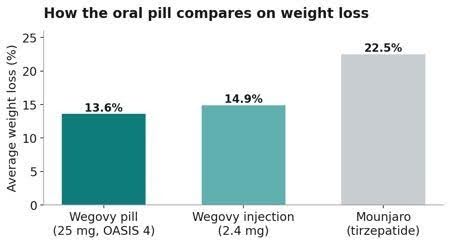
On effectiveness, the oral tablet lands in the same broad range as the standard weekly injection, with the dual-hormone injection Mounjaro still ahead at its top doses. The pill’s appeal is not superior weight loss; it is the absence of needles and the once-daily oral format.

The oral pill performs comparably to the standard injection; the trade-off is the daily routine.

So the real decision is a routine question, not a clinical one. If you have a stable wake-up time and you enjoy a structured morning, the pill slots in beautifully and the daily ritual is a feature, not a bug. If your mornings are chaotic or your wake time swings wildly, the weekly injection’s any-time flexibility may suit you better. Know your own routine before you choose the format.

The bottom line for routine-builders

The oral GLP-1 rewards exactly the kind of person who thinks in protocols. Build the stack, prepare the night before, take it first on waking, use the 30-minute window for your existing morning habits, and move everything else downstream. Done well, it is one of the cleanest examples of a medical regimen and a daily routine reinforcing each other rather than competing.

If you want the underlying detail, the exact dosing schedule, the absorption science and how treatment is assessed, Voy’s breakdown of how the daily tablet works is worth reading before you build your protocol around it, so the routine you design matches how the medication actually behaves.

Frequently asked questions

Why does the weight loss pill need a strict morning routine?

Oral semaglutide is absorbed in the stomach with the help of an added compound, and food, drink and other oral medicines all reduce that absorption. Taking it first thing on an empty stomach with only a sip of water, then waiting at least 30 minutes, is what makes it work. The routine is effectively part of the dose.

How do I remember to take it every day?

Anchor it to waking, the most reliable daily cue. Keep the pill and a small glass of water on your bedside table the night before, and take it the moment you sit up, before phone, bathroom or coffee. Habit-stacking onto an existing fixed routine is the most reliable way to maintain a daily protocol.

Can I take my other supplements at the same time?

No. Other oral supplements and medicines interfere with absorption just as food does, so they should be moved outside the opening 30-minute window. The simplest rule is that the GLP-1 pill is taken first and alone, with everything else bundled after the window alongside breakfast.

What should I do during the 30-minute wait?

Use it for the morning habits you already value, a shower, mobility work, sunlight, journalling or a short walk. The mandatory wait is roughly the length of a solid morning routine, so rather than dead time it becomes a protected block for high-value habits, and your first coffee marks its end.

Is the pill as effective as the injection?

Broadly, yes, against the standard weekly injection dose, with average weight loss in a similar range. The dual-hormone injection Mounjaro still produces more at its top doses. The pill’s advantage is being needle-free and once-daily; its trade-off is the strict daily routine.


Sources

First GLP-1 tablet for weight loss approved in the UK, GOV.UK

Wegovy pill UK approved: oral semaglutide guide 2026, Rightangled

MHRA approves the Wegovy pill, Second Nature

Wegovy pill approved in the UK: the first daily weight loss tablet explained, The Care Pharmacy

Factitious Vs Malingering: Causes, Signs & Treatment Guide

Factitious disorder is when someone fakes or causes symptoms because they have an inner need to be seen as sick, with no outside reward involved. Malingering is when someone fakes symptoms on purpose to get something specific, like money, time off work, or lighter legal consequences. Both involve dishonesty about symptoms, but the reason behind the behavior is what tells them apart. One is driven by a psychological need for the sick role, and the other by a clear, external goal.

That one-line answer sounds simple, but in a clinic or an emergency room, the line between the two can get blurry fast. A patient with symptoms that don’t match any test result might be doing it for attention and care, or angling for disability benefits. This article breaks down what separates factitious disorder from malingering, the causes behind each, the signs to watch for, and how professionals approach treatment.

Factitious Vs Malingering

What Is Factitious Disorder?

Factitious disorder is a recognized mental health condition where a person intentionally produces, exaggerates, or fakes physical or psychological symptoms without any obvious external payoff. The person isn’t doing it for money or to dodge responsibility. Instead, the behavior is tied to a deep, often unconscious need to occupy the “sick role” and receive the attention, sympathy, or care that comes with it.

People with this condition may inject substances to cause infections, tamper with lab samples, or describe symptoms of illnesses they don’t have. Some go through repeated surgeries or invasive tests, even when there’s real physical risk involved. A related and more severe pattern, called factitious disorder imposed on another, happens when a caregiver fabricates or induces illness in someone under their care, such as a child.

What Is Malingering?

Malingering isn’t classified as a mental illness on its own. It’s described in diagnostic manuals as a behavior, not a disorder, because the person doing it knows exactly what they’re doing and why. Someone malingering fakes or exaggerates symptoms to reach a clear, tangible goal.

Common motives include avoiding jail time, winning a lawsuit or insurance settlement, getting prescription medication, or skipping work obligations. Once that outside incentive disappears, the symptoms usually stop too, one of the biggest clues that points doctors toward malingering rather than a genuine or factitious condition.

Factitious Disorder Vs Malingering: The Core Difference

Both behaviors involve deliberate faking, but the “why” behind them separates one from the other completely.

Motivation Behind The Behavior

In factitious disorder, the motivation is psychological. The person wants to be viewed and treated as a patient, and that need can stem from unresolved trauma or a history of neglect. In malingering, the motivation is practical: there’s a specific outcome the person wants, and faking illness is simply the tool used to get it.

Goals And Incentives

When comparing malingering vs factitious disorder, the presence or absence of an external reward is the clearest dividing line. Malingering always has a concrete goal attached, such as compensation, avoiding punishment, or securing drugs. Factitious disorder has no such external reward; the “reward” is the attention and caretaking that comes from being seen as unwell. This is really the heart of the factitious vs malingering distinction that clinicians rely on daily, and it explains why the same symptom can lead to two very different diagnoses.

Common Causes Behind Each Condition

The roots of these two patterns are quite different, which helps explain why one is treated as a mental health condition and the other as a behavior tied to circumstance. When comparing malingering vs factitious disorder cases side by side, the causes rarely overlap in any meaningful way.

Causes Linked To Factitious Disorder

  • Childhood marked by illness, hospitalization, or neglect, where being sick was the only time a person received real attention
  • Personality disorders, particularly borderline or antisocial traits, tied to an unstable identity and a strong need for validation
  • A background in healthcare, which supplies the knowledge needed to convincingly fake symptoms
  • Underlying depression, anxiety, or unresolved grief finding an outlet through physical complaints

Causes Linked To Malingering

  • Pending legal cases where a diagnosis could reduce a sentence or support a personal injury claim
  • Workplace disputes involving disability claims, workers’ compensation, or a desire to avoid a demanding job
  • Financial stress that makes settlements or benefit payments appealing
  • A need to obtain controlled substances, particularly opioid or stimulant medications

Signs And Symptoms To Watch For

Spotting the difference isn’t always straightforward, but certain behavioral patterns tend to show up more with one condition than the other.

Signs That Point Toward Factitious Disorder

  • Vague or inconsistent medical history that changes with each retelling
  • Symptoms that appear or worsen right when someone is watching
  • Extensive knowledge of medical terminology and procedures
  • A pattern of seeking care at multiple hospitals or with multiple providers
  • Resistance to letting doctors speak with family members or previous physicians

Signs That Point Toward Malingering

  • Symptoms that conveniently match whatever the person stands to gain from
  • A big gap between reported pain or disability and what shows up on objective testing
  • Reluctance to cooperate with evaluations that don’t directly serve the goal
  • Symptoms that vanish once the legal case, claim, or obligation is resolved

How Often This Actually Comes Up

Confirmed cases of either condition are less common than the suspicion of them. A 2024 to 2025 analysis of more than 143,000 people diagnosed with functional neurological disorder found that only about 2.2% also carried a record of malingering or factitious disorder, and those cases tended to involve more clinical complexity and worse outcomes overall. That low rate is a useful reminder that most unusual symptom presentations still turn out to be genuine.

How Clinicians Tell Malingering Vs Factitious Apart

Because both conditions involve deception, distinguishing malingering vs factitious disorder relies heavily on context, consistency, and collateral information rather than any single test.

Tools And Approaches Used In Evaluation

Clinicians often review medical records across different providers to spot inconsistencies, interview family members when possible, and use structured psychological tests designed to detect symptom exaggeration.

They also pay attention to timing: symptoms that flare up around a court date or insurance deadline raise suspicion of malingering, while symptoms that persist regardless of the external situation lean more toward factitious disorder.

A 2024 case-based review in European Psychiatry looked at how conversion disorder gets mistaken for factitious presentations, noting that awareness of the behavior and the motivation behind it are what separate the two, which remains one of the hardest calls in clinical assessment.

Treatment Approaches For Each Condition

Treatment paths diverge sharply once a diagnosis leans toward one side or the other, largely because one is a mental health condition and the other is a behavior with an external driver.

Steps Typically Used For Factitious Disorder

  1. Building a stable, non-confrontational relationship with a consistent care team rather than jumping between providers
  2. Referring the person to long-term psychotherapy, often focused on trauma, personality patterns, or coping skills
  3. Coordinating care across specialists to limit unnecessary or repeated invasive procedures
  4. Treating underlying conditions such as depression, anxiety, or a personality disorder alongside the factitious behavior

Confrontation about the deception is generally avoided early on, since it tends to push people away from care rather than toward honesty.

Steps Typically Used When Malingering Is Suspected

  1. Clearly documenting the inconsistencies found during evaluation without making accusations
  2. Addressing the underlying incentive directly, whether that’s a legal matter, a workplace dispute, or a financial pressure
  3. Referring the person to appropriate resources, such as legal counsel or occupational support, rather than ongoing medical treatment
  4. Screening for genuine coexisting conditions, since a person can malinger some symptoms while still having real medical or psychiatric issues

Why Getting The Diagnosis Right Matters

Sorting out factitious disorder vs malingering isn’t about catching someone in a lie for its own sake. It’s about understanding what’s driving a person’s behavior so they get pointed toward the right kind of help, whether that’s psychotherapy, addressing a real external pressure, or both.

This factitious disorder vs malingering distinction matters clinically because treating a psychological need for care with legal tools won’t work, and treating a calculated behavior with therapy alone won’t address the incentive behind it. Careful, non-judgmental evaluation remains the best tool for telling the two apart. Ultimately, sorting out malingering vs factitious behavior comes down to intent, not just the symptoms on the surface.

Frequently Asked Questions

Is Malingering Considered A Mental Illness?

No. Malingering is classified as a behavior rather than a diagnosable mental disorder. It doesn’t meet the criteria for a standalone psychiatric illness, since the person is knowingly and deliberately faking symptoms for a specific external reason.

Can Someone Have Both Conditions At The Same Time?

It’s possible, though uncommon, for a person to show features of both. Someone might fake symptoms partly out of a psychological need for care and partly to gain something concrete, like time off work. When this overlap happens, clinicians usually focus on whichever pattern is causing the most harm first.

What’s The Easiest Way To Tell Them Apart?

A simple way to separate malingering vs factitious is to ask what the person gets out of it. A clear external reward, like money or avoiding punishment, points toward malingering. A reward that’s really just being cared for and treated as a patient points toward factitious disorder.

Do People With Factitious Disorder Know They’re Faking?

Yes, in the sense that they know they’re producing or exaggerating symptoms themselves. What’s usually not conscious is the deeper psychological need driving it. They know they aren’t really sick as claimed, but may not fully understand why they feel compelled to keep doing it.

Is Malingering Often Missed Or Misdiagnosed?

It happens more often than people assume, partly because clinicians are trained to believe patients and partly because thorough evaluation takes time. Cases tied to legal proceedings get closer scrutiny, but subtler cases in general medical settings can go unnoticed for a while.

Best Nursing Home Abuse Lawyers for Families Facing Serious Care Concerns

When concerns about a loved one’s nursing home care become serious, families often have to make decisions before they feel ready. A sudden injury, repeated hygiene issues, vague explanations from staff, or a noticeable change in mood can raise questions that are difficult to ignore. The right nursing home abuse lawyer can help families understand whether those concerns point to neglect, mistreatment, or a deeper breakdown in care. This list highlights law firms families may consider when serious care concerns call for a clearer path forward.

nursing home

What Families Should Look for in a Nursing Home Abuse Lawyer

A strong nursing home abuse lawyer should understand the legal details of a claim and the pressure families feel when something seems wrong. These cases can involve medical records, facility policies, staff notes, witness statements, photos, and timelines that are hard to sort through without the right experience.

Families should look for a lawyer or law firm that regularly handles nursing home abuse and neglect cases, rather than one that treats them as a small part of a much broader practice. That focus matters because these claims often involve specific concerns such as falls, pressure sores, medication errors, dehydration, malnutrition, physical abuse, emotional abuse, or wrongful death.

Clear communication matters as well. Families should feel comfortable asking who will handle the case, how updates are shared, what records the firm needs, and what happens after the first consultation. A good firm should be able to explain the process in plain language without making the family feel rushed.

Cost is another practical detail to ask about early. Many nursing home abuse lawyers work on a contingency fee basis, which means attorney fees are paid only if the case results in compensation. Before choosing a firm, families should ask how fees and case expenses are handled so expectations are clear from the start.

Top Nursing Home Abuse Lawyers for Serious Care Concerns

Nursing Home Law Center

Nursing Home Law Center focuses on nursing home abuse, neglect, and wrongful death claims, making it a relevant option for families dealing with serious concerns in a long-term care facility. Its work covers issues such as pressure sores, falls, medication errors, untreated medical conditions, unsafe supervision, and fatal injuries connected to poor care.

The Nursing Home Law Center legal team may be especially useful when a family needs help making sense of medical records, facility explanations, and patterns that suggest more than an isolated mistake. For families comparing firms, its nursing-home-specific focus can make it a clear starting point.

Senior Justice Law Firm

Senior Justice Law Firm handles nursing home abuse, assisted living neglect, elder abuse, and long-term care negligence cases. That focus makes it relevant for families dealing with serious injuries, repeated care problems, or concerns that a facility failed to protect a resident.

The firm may be worth considering when a family wants attorneys familiar with falls, infections, pressure wounds, unexplained decline, or death connected to facility care. Families comparing options should ask how the firm evaluates records, communicates updates, and handles day-to-day case responsibilities.

Pintas & Mullins Law Firm

Pintas & Mullins Law Firm handles nursing home abuse and neglect cases involving bedsores, falls, dehydration, malnutrition, medication errors, poor hygiene, physical abuse, and preventable injuries in care facilities. Its broader reach may appeal to families who want a firm with experience handling cases in different jurisdictions.

This firm can be relevant when a case depends on records, timelines, expert review, and a clear pattern of poor care. Families should still ask who would handle the matter directly and how communication would work throughout the case.

Levin & Perconti

Levin & Perconti handles nursing home abuse, neglect, medical malpractice, and wrongful death cases, with particular relevance for families in Illinois. The firm’s work includes claims involving pressure ulcers, falls, choking, burns, infections, medication issues, and serious injuries in long-term care settings.

It may be a suitable option when a case involves medical neglect, poor supervision, understaffing, or failure to follow a resident’s care plan. Families outside its primary geographic focus may want to compare it with firms that are more closely positioned for their state or region.

The Higgins Firm

The Higgins Firm handles nursing home abuse and neglect cases involving unsafe conditions, poor staffing, preventable injuries, and mistreatment in long-term care facilities. Its nursing home practice makes it relevant to families concerned that repeated problems may reflect a broader failure in care.

This firm may be worth comparing when the facts involve severe injuries, recurring signs of neglect, or facility explanations that do not match what the family is observing. As with any firm, families should ask about direct case handling, communication expectations, and experience with similar claims before deciding.

nursing home

How to Compare Law Firms Without Getting Overwhelmed

Once a family has a shortlist, the next step is to compare firms in a way that keeps the decision clear. Nursing home abuse cases can involve emotional conversations, medical records, facility notes, photos, timelines, and conflicting explanations. Without a simple process, the details can quickly blur together.

Start by keeping one shared file for the most important information. That can include the resident’s name, facility name, dates of concern, photos, medication changes, hospital visits, staff names, written responses from the nursing home, and any relevant legal and financial documents that could affect who has authority to request records or make decisions.

When speaking with a law firm, families should ask how often the firm handles nursing home abuse and neglect claims, who the main point of contact will be, what records the firm wants to review, and how the case evaluation process works. The answers should be clear and specific. A firm that regularly handles these cases should be able to explain the process without burying the family in legal language.

Communication style can make a big difference. Some families want frequent updates, while others prefer one designated family member to speak with the legal team. The right choice is the firm that can handle the facts of the case while giving the family a process they can actually follow.

Red Flags That May Call for Legal Help

Some problems can be addressed through a direct conversation with staff or by requesting an update to the care plan. Other concerns deserve a more serious response, especially when they recur, worsen, or are accompanied by explanations that do not align with what the family is seeing.

Families should watch for unexplained bruises, pressure sores, weight loss, dehydration, medication problems, poor hygiene, repeated falls, fearfulness, or sudden mood changes. When these issues repeat or lack a clear explanation, they may be signs of elder abuse.

A written timeline can help families separate isolated issues from recurring ones. Dates, photos, names, hospital visits, and staff responses can make the situation easier to explain during a legal consultation. If the facility provides vague answers or the same concern keeps recurring, waiting for the next incident may put the resident at greater risk.

Legal help may be worth considering when a family suspects that poor staffing, unsafe conditions, ignored medical needs, or mistreatment caused real harm. A lawyer can review the available facts, explain whether the concern may support a claim, and help the family understand which next steps make sense.

Choosing Support That Matches the Situation

The best nursing home abuse lawyer for one family may not be the best fit for another. A severe injury, a possible wrongful death claim, a pattern of ignored medical needs, or a concern tied to a specific state’s nursing home laws can all affect which firm makes the most sense.

Families should look for a legal team that explains the process clearly, reviews the facts carefully, and gives honest feedback based on the available information. A good consultation should leave the family with a better understanding of the situation, even if the next step is still being considered.

It also helps to choose a firm that feels organized from the beginning. Serious care concerns already come with enough stress. The right legal support should make the path feel more manageable, not more confusing.